Push bar and panic device installation is supposed to give people a fast, reliable way out of a building. So what do you do when you push the bar and the latch refuses to pull back?
Maybe you noticed it on a Monday morning when an employee had to shoulder the door open. Maybe it only sticks on hot afternoons, or only when the door is pulled tight against the frame. Either way, a panic bar latch that will not retract is more than an annoyance. It is a safety problem, and it usually has a clear cause.
Below are the seven most common reasons a panic bar latch fails to retract, how to spot each one, and when it is time to bring in a professional.
Quick Answer: Why a Panic Bar Latch Won’t Retract
Most of the time, a panic bar latch fails to retract because of one of these issues:
- The door or strike plate is out of alignment
- The door is binding against the latch
- Dogging is engaged or stuck
- A spring or internal part is worn or broken
- Dirt, rust, or dried lubricant is gumming up the mechanism
- The device was installed or adjusted incorrectly
- The linkage, rods, or latch bolt is bent or damaged
Let’s break each one down. First, though, it helps to understand what is happening inside the device.
How a Panic Bar Works, in Plain English
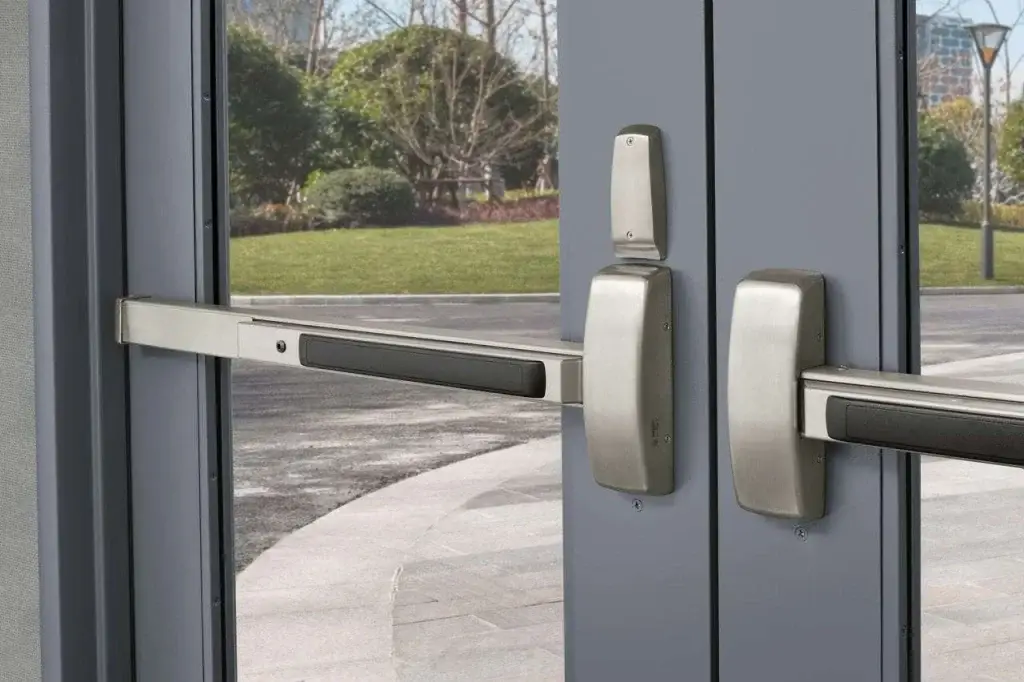
A panic bar, also called a push bar, crash bar, or exit device, is a horizontal bar mounted across the inside of a door. When someone pushes on it, an internal mechanism pulls the latch bolt back, and the door opens. Panic hardware is built so a person can exit quickly without needing a key, a knob, or any special knowledge.
Think of it like a mousetrap in reverse. A spring holds the latch out, keeping the door locked. Pressing the bar compresses that spring and pulls the latch in. When the latch cannot move, something is blocking it, binding it, or no longer working as designed.
There are a few common types, and the style affects what can go wrong:
- Rim exit devices latch onto a strike plate on the door frame and are surface-mounted on the door.
- Surface vertical rod devices use rods that run up and down to latch at the top and bottom of the door.
- Concealed vertical rod devices hide the rods inside the door for a cleaner look.
- Mortise exit devices are installed inside a pocket cut into the edge of the door and are often found on heavier commercial doors.
Now let’s look at the causes.
7 Common Causes of a Panic Bar Latch Not Retracting
1. Door or Strike Plate Misalignment
This is the most frequent culprit. Doors settle over time. Hinges loosen, frames shift, and heavy use causes the door to sag. When that happens, the latch no longer lines up cleanly with the strike plate, which is the metal piece on the frame that the latch rests against.
If the latch is pressed hard against the strike, or sitting off-center, it can bind. The bar may feel stiff, or it may push down and the door still won’t release.
What you may notice: The door scrapes at the top or bottom. There are uneven gaps around the frame. The door opens easily if someone pulls toward them while pushing the bar.
Fix: Tighten the hinge screws, check for door sag, and adjust or reposition the strike plate. A locksmith can also realign the door properly.
2. The Door Is Binding on the Latch
This one is related to alignment but worth separating. If the door is under pressure, either from wind, a building pressure difference, or an overly strong door closer, the latch can be squeezed tight against the strike. Even a perfectly good latch can’t retract when the door is pulled hard against it.
Picture trying to pull a drawer’s lock open while someone leans on the drawer. The mechanism is fine; the load is the problem.
What you may notice: The latch retracts when the door is pushed slightly inward but not otherwise. It may happen more on windy days or when the HVAC system is running.
Fix: Adjust the door closer so it is not slamming or pulling too hard, and check that the door can close freely without rubbing. If air pressure is the issue, a professional can recommend solutions.
3. Dogging Is Engaged or Stuck
Dogging is a feature that holds the push bar in the pressed-down position so the door stays unlatched. It is used on busy doors during business hours. In simple terms, dogging keeps the latch retracted on purpose.
The problem works in reverse, too. If the dogging mechanism is jammed, partially engaged, or damaged, it can interfere with the normal movement of the bar and the latch.
What you may notice: The bar feels stuck partway, or it doesn’t spring back. The door is staying unlatched when it should lock, or it won’t unlatch when it should.
Fix: Check that the dogging key or hex tool operates freely and is set to the correct position. If it is stuck or won’t release, stop forcing it and call a professional.
4. A Worn or Broken Spring or Internal Part
Panic hardware gets used a lot. A front door at a busy store can see hundreds of pushes in a day. Over time, springs weaken, small parts wear down, and the internal mechanism can stop responding properly.
This is the equivalent of an old pen with a tired click mechanism. It still looks fine, but the part that does the work has given out.
What you may notice: The bar feels loose, sloppy, or lacks resistance. It doesn’t return fully after you push it, or the latch moves slowly or not at all.
Fix: The internal mechanism, sometimes called the mechanism case, usually needs to be repaired or replaced. This is a job for a trained locksmith, since taking apart a device incorrectly can create a bigger safety issue.
5. Dirt, Rust, and Dried Lubricant
Exit devices live in tough conditions. Dust, grime, moisture, and temperature swings all take a toll, especially on exterior doors, in coastal areas, in warehouses, or in kitchens. Over time, metal parts rust, and old grease turns into a sticky paste that stops the latch from sliding.
What you may notice: The latch feels sluggish or gritty. It works better after repeated pushing, or it sticks more in cold or humid weather.
Fix: Clean the visible parts, and apply a light, dry lubricant made for locks and hardware. Avoid heavy oil or grease, which collects dust and can make the problem worse. If rust is deep inside the device, replacement may be the better choice.
6. Incorrect Push Bar and Panic Device Installation
Sometimes the problem has been there since day one. Push bar and panic device installation requires precise measurements, correct door preparation, and the right hardware for the door type. If the device is mounted too high or too low, the rail is not level, the screws are over-tightened, or the wrong strike is used, the latch can bind or fail to retract smoothly.
The door itself matters, too. A device that is installed on a door that warps, flexes, or is not properly reinforced can struggle to work under real-world conditions.
What you may notice: The issue has been there since the device was installed. The bar feels uneven, the latch drags on the strike, or the trim doesn’t line up.
Fix: Have a professional inspect the mounting, alignment, and strike placement. Correct installation is also important for compliance with life-safety rules, since exit doors must release reliably. Requirements vary by building type and local code, so a qualified locksmith can help you meet them.
7. Bent Rods, Damaged Linkage, or a Damaged Latch Bolt
On vertical rod devices, the bar controls long rods that run to the top and bottom of the door. If one of those rods is bent, out of adjustment, or the linkage connecting everything has come loose, one latch may retract while the other stays stuck.
A damaged latch bolt itself can also cause trouble. If the door was slammed, forced open, or hit by a cart or a vehicle, the latch can get bent or burred, and it may no longer slide smoothly into the case.
What you may notice: The top of the door releases but the bottom doesn’t, or vice versa. The latch looks bent, chipped, or has visible wear marks.
Fix: Rods and linkage should be adjusted and, if needed, replaced by a professional. Damaged latches often mean replacing parts or the whole device.
Safe Troubleshooting You Can Try Before Calling a Locksmith
Here are a few basic checks that are safe for most people:
- Check for visible obstruction. Look for debris, ice, or objects near the latch and strike.
- Inspect the door alignment. See if the door sags, scrapes, or has uneven gaps.
- Test the dogging. Make sure it is fully disengaged.
- Try pushing the bar while relieving pressure on the door. If it works when the door is pushed gently inward, the latch is likely binding.
- Look at the strike plate. Check for loose screws or bent metal.
- Check the door closer. Make sure it isn’t too tight or catching.
If none of these solve it, stop. Forcing the bar, hitting it, or taking apart the device without experience can make things worse.
And one more thing: if a panic bar on an emergency exit isn’t releasing, treat that door as out of service until it is fixed. Make sure people use another exit, and arrange repair as soon as you can.
When to Call a Professional for Panic Bar Repair or Replacement
Some problems are simple. A stubborn latch caused by a loose hinge screw is an easy fix. But if you are dealing with any of the following, a locksmith should take a look:
- The latch still won’t retract after the basic checks
- The bar is loose, bent, or cracked
- The device has been in service for many years and shows heavy wear
- The door is a fire-rated door or a main exit
- You are not sure the device meets current code requirements
- You need a new device, or an upgrade, such as a different style or trim
This is where professional push bar and panic device installation matters. A properly installed exit device is matched to the door type, correctly aligned, and tested so it releases smoothly every time. It saves you from repeat repairs, and it gives you confidence that people can get out safely in an emergency.
Professional Push Bar and Panic Device Installation You Can Count On
A panic bar latch that fails to retract usually comes down to one of seven things: misalignment, a binding door, dogging trouble, worn internal parts, dirt and rust, poor installation, or damaged rods and latches. Some are easy to spot. Others need a trained eye and the right tools.
So the next time a stubborn exit door has you wondering whether it is safe, reach out to Klever Locksmith Services. We provide professional push bar and panic device installation, repair, and replacement, backed by a team that has spent years helping businesses and property owners keep their doors safe and working. Call (323) 393-8056 or visit https://kleverlocksmith.com/push-bar-and-panic-device-installation/ to learn more about how we can help you.
Frequently Asked Questions About Panic Bar Problems
Why is my panic bar hard to push?
A stiff bar usually points to door binding, dirty or dry parts, a misaligned strike, or a weak or worn internal mechanism.
Can I lubricate a panic bar myself?
Yes, in many cases. Use a light, dry lubricant made for locks and hardware, and apply it sparingly. Avoid heavy grease or oil, which attracts dirt, and don’t spray lubricant into areas that need professional servicing.
How often should panic bars be inspected?
Regular checks are a good habit, especially on high-traffic doors. Many businesses test exit devices on a routine schedule, and local codes may require periodic inspection of doors.
Is it safe to keep using a panic bar that sticks?
No. An exit device that doesn’t release reliably can trap people in an emergency. Take it out of service as an exit until it is repaired, and direct people to another exit.
Should I repair or replace an old panic bar?
If the device has minor alignment or lubrication issues, repair is usually enough. If parts are worn, bent, or hard to find, replacement often makes more sense.